
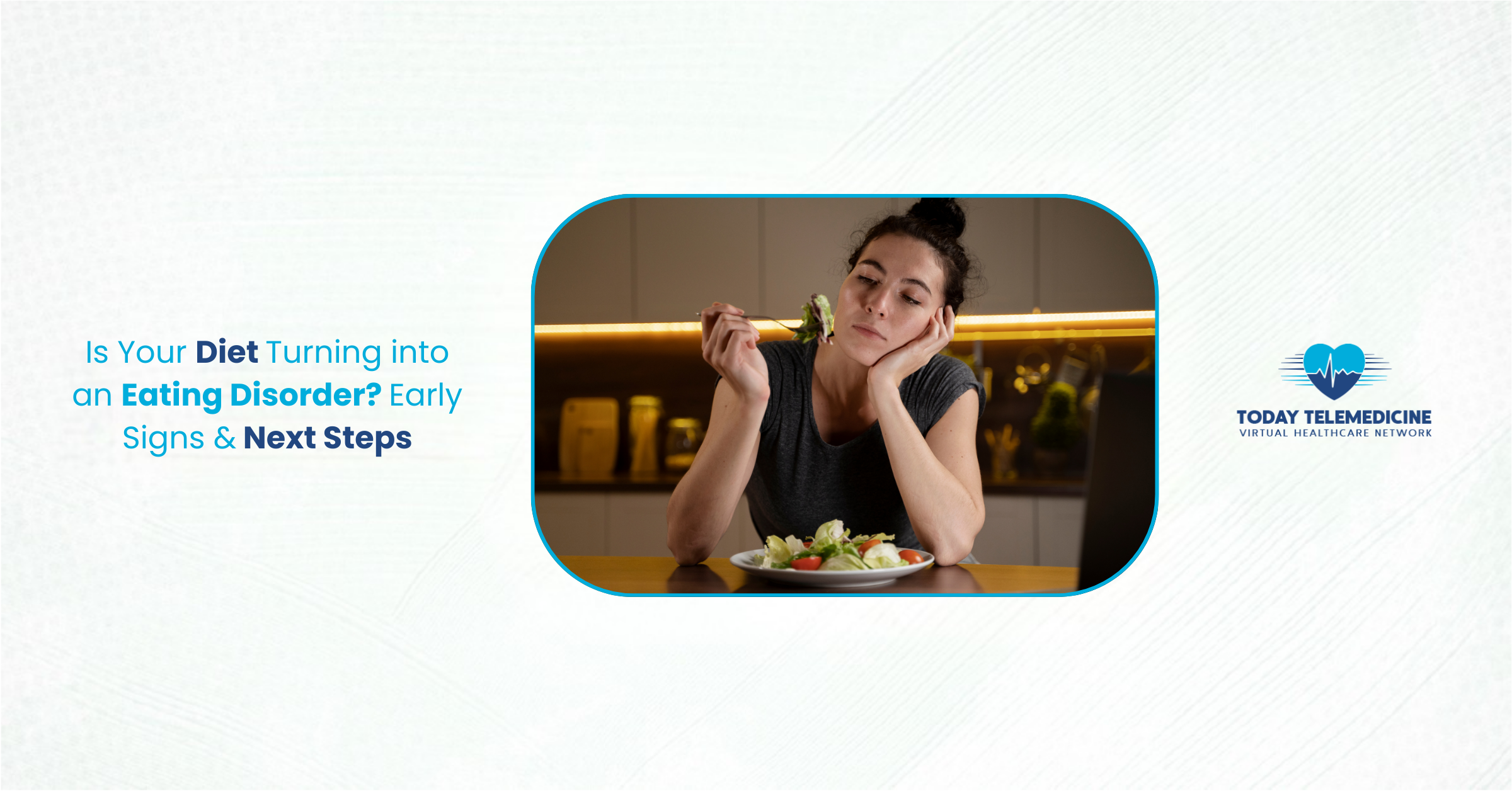
You change the way you eat to feel better or stronger. At first, it makes you feel strong, but then something changes. Food choices now take up too much of my brain space, and meals feel more stressful than nourishing.
A lot of people go through this. What starts as a good intention to get healthier might slowly turn into disordered eating patterns, and if ignored,sometimes into a full eating disorder. The good news is that recognizing these changes early makes a significant impact. You can step in before these habits become tougher to break.
Understanding the Difference: Normal Dieting vs. Disordered Eating vs. Eating Disorders
Understanding where your eating habits fall on the spectrum can help you feel less stressed and get the information you need.
What Counts as “Normal” Dieting?
Eating healthy involves flexibility and not punishing yourself. It does not involve strict rules; instead, it focuses on decisions that will help you stay healthy in the long term. The healthy way of doing things often consists of:
- Focuses on Nourishment: It emphasizes pleasure and nourishment, not restriction and guilt.
- Flexibility: It is flexible (occasionally having favorite foods and treats).
- Holistic outcomes: Perceiving shifts such as increased energy, improved sleep, and a more relaxed state.
When Does It Become Disordered Eating?
Disordered eating sits in the middle ground. Habits become more rigid and are surrounded by fear, although it is not yet a formal diagnosis. It starts slowly but can become a serious problem over time. Here are some signs of disordered eating:
- Restrictive patterns: It means skipping meals a lot or cutting out whole food groups.
- Social withdrawal: Not going out to eat or do things with other people because you’re worried about eating. This increases stress and reinforces the habit.
- Emotional triggers: Food rules that are based on stress instead of real nutritional needs. Food is used to deal with emotions rather than to provide energy.
Defining Eating Disorders: A Serious Mental Health Concern
Eating disorders are severe mental health conditions characterized by persistent, harmful behaviors regarding food and body image. These conditions may lead to severe physical, emotional, and social damage.
- Root Causes: They are frequently based on unmet emotional needs (that are) control, safety, or self-worth.
- Demographics: Eating disorders may be experienced by all people, irrespective of age, sex, and history.
- Recovery: Successful treatment requires professional diagnosis and compassionate support.
Why Does Dieting Sometimes Lead to Eating Disorders?
It is not necessarily always about the food. People often use dieting to hide their emotional problems.
Society’s pressure to have a “perfect” body can turn a simple diet into an obsession. Strict food rules enable some individuals to overcome anxiety, perfectionism, or a desire to be in control when things are in a state of uncertainty.
Other factors may result in eating disorders, and they include:
- The reward cycle: When you lose weight fast, you put stricter rules in place.
- Managing your feelings: Controlling what you eat can help with stress.
- External validation: People who aren’t involved, such as family members and comparisons on social media, support the behavior.
You need to understand these risks to identify unhealthy patterns and choose a better way to improve your relationship with food.
Early Warning Signs: Is This Happening to You?
It’s easy to overlook the early, subtle signs of disordered eating. But the first step to getting better is to notice these warning signs. Grouping these symptoms can help you think about what you’ve been through without getting too upset.
Emotional and Behavioral Warning Signs
- Too many thoughts about calories, clean eating, or weight that get in the way of everyday life.
- Strong distress when meal plans or workout schedules are messed up.
- Eating in secret or being embarrassed about what you eat.
- Using restrictions to deal with stress or bad feelings.
Physical and Lifestyle Symptoms
- Always being tired, having a foggy brain, or being cold.
- Staying away from social situations, especially those that involve food.
- Frequent body checking, you look in the mirror or weigh yourself.
- Trouble digesting food and staying focused because they don’t eat enough.
Impact on Life and Relationships
- Stress from choosing what to eat or from lunchtime that makes relationships more complicated.
- When you become obsessed with food, you lose interest in hobbies.
- How you eat can affect your mood, like making you irritable or anxious.
If you see these signs of an eating disorder, remember that they are not a failure; they are a sign. You need help with your body and mind.
Who Is Most at Risk? Identifying Vulnerabilities
Some things can make it more likely that people will have trouble with their eating or how they feel about their bodies. If you want to stop something from happening or help someone right away, you need to know about these risk factors.
Common triggers include:
- Mental Health History: A past of depression, anxiety, or low self-esteem.
- High-Pressure Environments: Places like competitive sports, modeling, or a lot of social media, where how you look matters.
- Big Life Changes: People might start a diet when they get a new job, move, or have problems in their relationship to feel like they have control.
- Family Dynamics: Patterns or messages that linked weight or eating habits to their worth.
Just because you are in one of these high-risk groups doesn’t mean you will have a problem. Instead, use this information to remind yourself to be kind to yourself and pay attention to how you feel about your body and the food you eat.
Next Steps: What to Do If You Spot These Signs
It’s brave of you to admit that your relationship with food has become stressful. Here are some simple, kind ways to move on if you’ve seen the signs.
- Practice Self-Reflection
Every day, write in a journal for a few minutes about how you feel about food. Don’t judge this; be interested in it.
- Identify triggers: Write down when they are at their strongest and what emotions are behind them.
- Celebrate your wins: Take time to enjoy the little things, like a meal that doesn’t make you worry.
- Open Up to a Support System
Talk to a trusted friend or family member who is good at listening about how you feel.
- Begin with something simple, like “I’ve been worried about what I’ve been eating lately.”
- Find a connection: Talking about your problems might make it seem a lot less scary to ask for help.
- Seek Professional Guidance
Talking to a mental health professional is the best way to find out what’s going on and develop a recovery plan.
- Get an assessment: A professional can help you figure out if your eating habits are unhealthy.
- Consider therapy: CBT (Cognitive Behavioral Therapy) and other treatments that have been shown to work can help you change the way you think about food.
- Try virtual care: Online therapy is a private and straightforward way to get help.
- Rebuild Healthy Habits Slowly
It takes time to get your body to trust you again. Choose one small, kind thing at a time.
- Bring back some variety: Slowly add back “scary foods” and see how you feel.
- Move for fun: Don’t work out to “earn” your calories; do it to feel good.
Prevention Tips: Keeping a Healthy and Balanced Diet
If you’re changing your diet, make sure it’s still helpful and balanced.
- Put your feelings first: Don’t make goals based on how you look; make them based on how you feel and how much energy you have.
- Take care of your feed: Join social media groups that celebrate different bodies and ways of life.
- Talk to a professional: Before you start a new diet or meal plan, talk to a professional.
- Change the subject: Instead of talking about harsh rules or criticism, talk about food in a way that makes you feel good and nourishes you.
Find Peace with Food
When you diet, you shouldn’t lose your happiness or peace of mind. The sooner you see the signs of disordered eating, the easier it will be to get back to a healthy relationship with food. Remember this: disordered eating is a red flag in the early stage, not an eating disorder yet. Early support can help prevent these patterns from turning into a disorder.
You don’t have to do this all by yourself. If you’re having a hard time, one conversation can change everything. You can get help from our online services at Today Telemedicine. Reach out today, we provide compassionate, non-judgmental care to help you navigate your relationship with food and your body.
FAQs
Is it the same thing to have disordered eating and an eating disorder?
Disordered eating and eating disorders are not similar. Disordered eating means you eat rigorously or variably, which causes you to be stressed, but it does not qualify as a diagnosis. Eating disorders like anorexia and bulimia are grave mental health issues that need to be treated by a professional.
Can disordered eating go away by itself?
Mild habits can improve as life changes, but compulsive behaviors rarely resolve on their own. Get help if your relationship with food makes you feel bad, ashamed, or affects your daily life.
How do I know if I’ve gone too far with my diet?
Think about whether this makes you feel free or trapped. It might not be safe if you think about food all the time or skip social events to eat less. You need to deal with that feeling if it’s too much for you.

