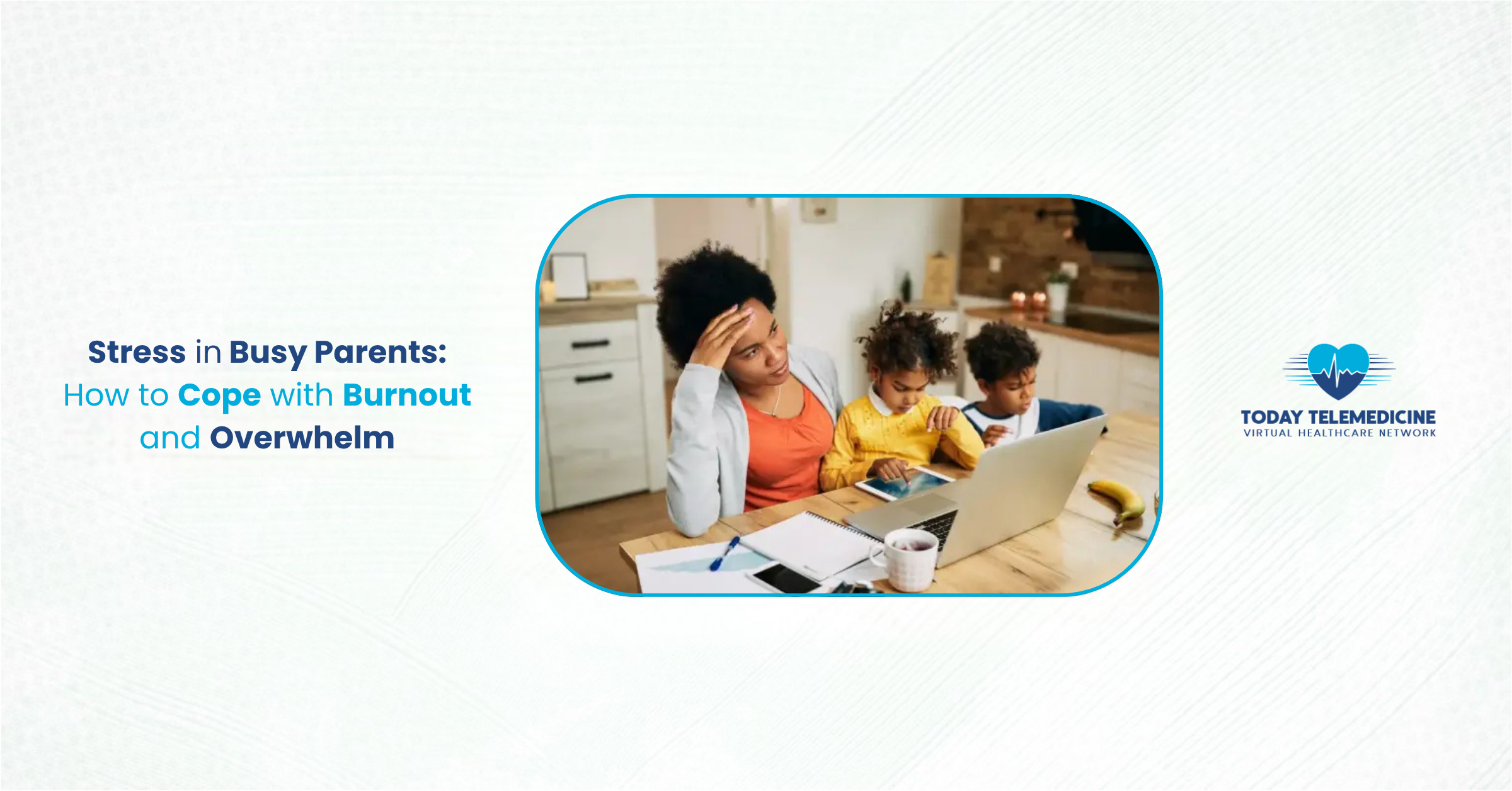
After a long day of work calls, dropping off kids at school, making dinner, helping with homework, and getting ready for bed, the house is finally quiet. You settle down to rest, but instead you feel tired and guilty since your mind is already racing ahead to all the things you have to accomplish tomorrow. You are not the only one who has had this moment. A lot of parents are under a lot of stress all the time, and if they don’t do anything about it, it can slowly lead to burnout.
At Today Telemedicine, we regularly support parents who are navigating these overwhelming feelings and looking for simple, effective ways to feel better through virtual mental health care.
What Is Burnout in Busy Parents?
When busy parents are burnt out, they are emotionally, mentally, and physically drained from dealing with the pressures of job, family, and everyday life. It’s not simply being weary; it’s a deeper sense of being drained that impacts your energy, mood, and capacity to do your best work.
Parents who are stressed out often feel weary all the time, irritable, have difficulties focusing, or are emotionally depleted. This stress doesn’t just affect you. It has an effect on the whole family. The good news is that our virtual therapy, psychiatry, and support services are made to help parents feel better without adding to their already full schedules.
We’ll talk about what parental burnout really looks like, the everyday things that stress parents out, how to deal with feeling overwhelmed, and why getting virtual mental health help can be one of the best things you can do for yourself and your loved ones.
What Burnout Looks Like for Busy Parents
At the end of the day, parents who are burned out feel more than just tired. It is a strong feeling of being mentally, emotionally, and physically tired that comes from carrying the hidden weight of family life for too long.
Parents often talk about it in ways that are very personal:
- Feeling emotionally numb or more upset than usual, even with the people you love the most
- Always being mentally tired, which makes even easy decisions seem like a lot of work
- Feeling guilty for not doing “enough” and always worrying that you won’t be able to handle your responsibilities
- Physical signs like headaches, tight muscles, or trouble sleeping, even when you’re tired
These things really happened and are real. These signs don’t mean you’re a bad parent; they just mean your body and mind have been working too hard and need help.
Common Causes of Parental Stress and Burnout
There isn’t usually one huge thing that causes parental burnout. They usually result from stress that builds up over time.
Some common causes are:
- Balancing work with parenting and chores around the house
- The constant mental stress of keeping track of everything for the family
- Always worrying about the health, school, and future of the kids
- Not having enough time for yourself or solid support systems
For example, a parent may be managing work deadlines while also handling school schedules, meals, and emotional needs all at the same time. Recognizing these pressures is a critical first step in dealing with them.
Early Warning Signs of Parental Burnout
It’s simpler to deal with stress and burnout if you see them early on.
Some common early indicators are:
- Daily duties are starting to feel too hard to handle
- Not wanting to do things with your family that you used to enjoy
- Tired even after resting or sleeping
Taking care of yourself by paying attention to these signals can help you avoid long-term burnout.
Practical Ways to Manage Stress as a Parent
You don’t have to make big changes in your life to start feeling better. Small, regular routines can help you avoid burnout and lower your stress levels.
Here are some useful tips:
- Set aside modest amounts of time for yourself, even only 10 minutes a day
- Make soft limits and learn to say no when you need to
- Understand that “good enough” is often good enough
- Split up your duties with your partner or support system
These measures aren’t about accomplishing more; they’re about saving your energy so you can be your best self.
When Stress and Burnout Need Professional Support
There are moments when tension is too much to handle on your own. That doesn’t mean you’re weak; it means you need help. You may need professional help if stress is affecting:
- Your sleep
- The people you know
- Your mood or drive
- Your ability to get things done every day
Virtual care makes it easier than ever to obtain help from home without changing your schedule.
Explore therapy options: https://todaytelemedicine.com/therapy/
Learn about psychiatry support: https://todaytelemedicine.com/psychiatry-services/
How Today’s Telemedicine Supports Busy Parents
We at Today Telemedicine know that parents need help that works in the real world.
Here are some of the things we do:
- Scheduling that works with your schedule
- Video sessions at home that are private
- Therapies like cognitive behavioral therapy (CBT), mindfulness, and solution-focused methods
- Help from psychiatry as needed
Many parents say that virtual care helps them keep on track and observe actual development without adding stress.
Conclusion
Busy parents often feel stressed, and that’s okay. It can make you tired if you don’t deal with it. But with small, steady steps and the right help, you can get back on track and feel more in charge.
Today Telemedicine’s virtual mental health services make it easier than ever to get helpful and caring help without having to change your already busy schedule. If this sounds like you, you might want to book a virtual session or check out our services to feel better.
It’s not selfish to take care of yourself; it’s good for you and your family.
FAQs
What are the first signs of burnout in busy parents?
Some early indicators are feeling numb emotionally, being irritable, always being tired, and feeling guilty even after getting some rest.
How can I manage stress when I have no time?
Take short breaks, breathe deeply, or ask someone to help you with one activity.
Is parental burnout the same as stress?
No. Burnout is worse and includes feeling emotionally drained and like you have nothing left to give.