It might be tiring to eat because of how you feel. When you’re stressed, bored, or upset, eating can help for a short time, but it usually makes you feel worse afterward. You’re not the only one who has trouble figuring out what makes you eat when you are sad and how to stop it.
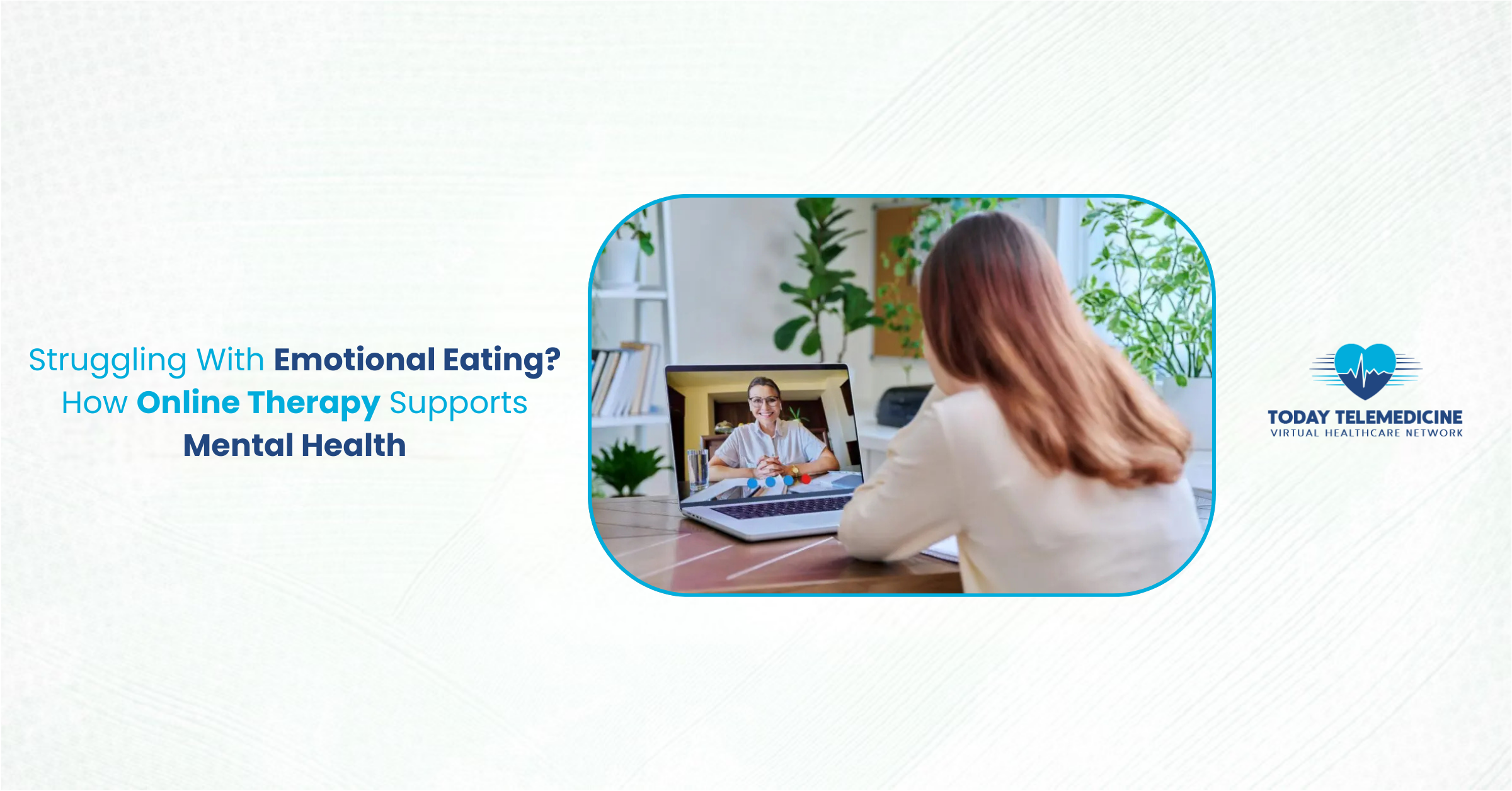
A lot of people think that emotional eating is a lack of control, but it is linked to your mental health. Most of the time, it means you need help with how you feel. Online therapy is a simple way to learn about these behaviors without feeling judged. A professional can help you learn healthy ways to deal with stress and stop eating when you’re upset without feeling bad about it.
What Is Emotional Eating?
You eat because you’re sad, not because you’re hungry. It’s fine to eat comfort food now and then, but if you do it all the time to deal with difficult feelings, that’s a problem.
Emotional Eating vs. Physical Hunger
The first step to recognizing harmful habits is to know the difference between emotional hunger and physical needs.
Emotional hunger:
- Emerges on unexpectedly and frequently feels like it needs to be dealt with right away.
- Wants certain foods, like comfort foods that are high in calories.
- Stays with you even after your stomach is full.
- Makes you feel bad or guilty later.
Physical hunger:
- Grows slowly over time.
- Is adaptable and can handle a wide range of meal choices.
- Stops when your body is full.
Common Emotional Eating Triggers
This kind of behavior is usually connected to certain emotional states in which food is used to calm down, take your mind off things, or get away from them for a short time. Common triggers include:
- Stress and anxiety
- Sadness, loneliness, or grief
- Boredom or emotional weariness
- Burnout and overstimulation
The Link Between Emotional Eating and Mental Health
Emotional eating isn’t just a bad habit; it has a lot to do with how you feel mentally and emotionally. To break the cycle and develop healthy methods to deal with things, you need to understand this connection.
How Emotions Influence Eating Behaviors
Your body makes cortisol when you’re under a lot of stress. This hormone can make you very hungry and make you crave certain foods, especially those that are high in sugar or fat. Eating these comfort foods turns on the brain’s reward system, which gives you a short-term sense of relaxation.
Your brain starts to link eating with emotional comfort over time. Eating becomes a way to deal with things that gives you a short break, but doesn’t fix the problem that is making you upset.
Mental Health Conditions Commonly Linked to Emotional Eating
Emotional eating is often associated with:
- Anxiety disorders, where food helps calm nervous system arousal
- Depression, which can change how hungry you are and how motivated you are
- Chronic stress from work, taking care of someone, or money problems
- Trauma or unresolved emotional distress, when food feels like it gives you stability or comfort
To really deal with emotional eating, you also need to deal with these mental health issues.
Emotional Eating and Emotion Regulation
When people talk about health, they often forget about a very important thing: controlling their emotions. This is the skill of being able to comprehend, accept, and control your feelings.
When people don’t have these skills, their feelings can soon become too much to handle, and food can become a quick and easy way to deal with them. Therapy helps you deal with your feelings instead of attempting to run away from them by teaching you how to control your emotions better. This psychological basis is a primary reason treatment frequently proves more beneficial than diets alone.
Why Emotional Eating Is Not About Lack of Willpower
Emotional eating isn’t a sign of weakness; it’s a taught way to deal with stress that comes from your brain’s demand for safety and comfort.
When food makes you feel better for a short time, your brain makes a strong link. This pattern becomes automatic over time. This is why rigid diets don’t always work: they make you more stressed and take away your main way of dealing with stress.
To make a change that lasts, you need to change how you look at things. Instead of criticizing yourself, think about:
- Compassion: Be kind to yourself while you go through this.
- Understanding: Know what makes the activity happen.
- Skill-building: Learn how to deal with your feelings without eating.
How Online Therapy Helps Address Emotional Eating
Online therapy can help you figure out why you eat when you’re sad and how to deal with it in a way other than just telling you what to eat.
Identifying Emotional Patterns Behind Eating
A therapist helps you understand your habits by looking at the psychology behind them without judging you. You will learn:
- Triggers: The emotions that make you want to eat.
- Timing: The times of day or situations when cravings are the strongest.
- Mindset: Your thoughts and feelings before and after you eat.
Learning Healthier Coping Strategies
Therapy helps you deal with stress in ways other than eating. You’ll learn how to respond to your feelings instead of just reacting by:
- Emotional Regulation: Learning how to deal with your feelings right away.
- Stress Management: Tools to deal with daily stress without eating.
- Grounding: Relaxation methods that help you feel grounded.
- Routine: Doing things regularly that help you stay emotionally stable.
Address the Root Cause
Online therapy helps people heal more deeply by getting to the bottom of their problems, like:
- Anxiety or depression
- Trauma or long-term stress
- Emotional overwhelm
Therapy Approaches That Support Emotional Eating
There are many proven ways to help you deal with emotional eating. Here are some of the most common:
- Cognitive Behavioral Therapy (CBT): This type of therapy helps you understand the thoughts and behaviors that cause you to eat when you’re stressed and replace them with healthier ways to deal with stress.
- Dialectical Behavioral Therapy (DBT): DBT teaches people how to deal with stress and control their emotions without using food.
- Acceptance and Commitment Therapy (ACT): This method helps you become more aware of your thoughts and feelings so you can make decisions that are in line with your beliefs instead of short-term cravings.
- Mindfulness-Based Approaches: These techniques make you more aware of your body’s signals of hunger and fullness, as well as the things that make you feel bad.
It’s easier than ever to get these evidence-based treatments through online therapy. You can get help from the comfort of your own home.
Everyday Strategies to Manage Emotional Eating (Alongside Therapy)
You can also help by doing little things every day, like:
- Before you eat, stop and think about how you feel.
- Do exercises that help you breathe deeply or feel more grounded.
- Make a note of how you feel and what you eat.
- Use other senses, like movement, and warmth.
- Create comfort rituals that don’t involve food.
When you get help from a professional, these strategies work best.
Emotional Eating vs Eating Disorders
It’s important to remember that eating because of how you feel is not the same as having an eating disorder. Eating disorders are worse than emotional eating and need special treatment.
If you think your eating habits are out of control, happen too often, or are too much for you to handle, a mental health professional can help you figure out what kind of help you need.
Benefits of Online Therapy for Emotional Eating
Online therapy has:
- Private, one-on-one sessions
- Flexible scheduling
- No need to travel or wait in line
- Reduced stigma
- Ongoing, reliable support
People are more likely to stay involved in their care when they can easily get to it.
Who Can Benefit From Online Therapy for Emotional Eating?
- People who eat when they’re upset or stressed
- People who are anxious or depressed
- People who are gaining or losing weight because of their mental health
- Anyone who feels stuck in a cycle of guilt and control
Conclusion
Eating when you’re upset isn’t a failure; it’s a sign. A sign that your emotions need care, understanding, and help. Online therapy is a nice way to help you get better by looking at your emotional patterns, teaching you how to deal with them, and encouraging good mental health.
Taking that first step is easy and simple with Today Telemedicine. From the comfort of your own home, we’re here to help you build a better relationship with food and your feelings. We can help you whether you need ongoing treatment, psychiatric help, or advice that is tailored to your needs.
FAQs
Can online therapy really help with emotional eating?
Yes. It addresses the emotional and psychological roots of emotional eating.
How long does therapy take to show results?
Some notice changes in weeks; deeper healing takes time.
Is emotional eating a mental health condition?
It’s not a diagnosis but is closely linked to mental health.
Do I need a diagnosis to start therapy?
No. Therapy is available without a formal diagnosis.