
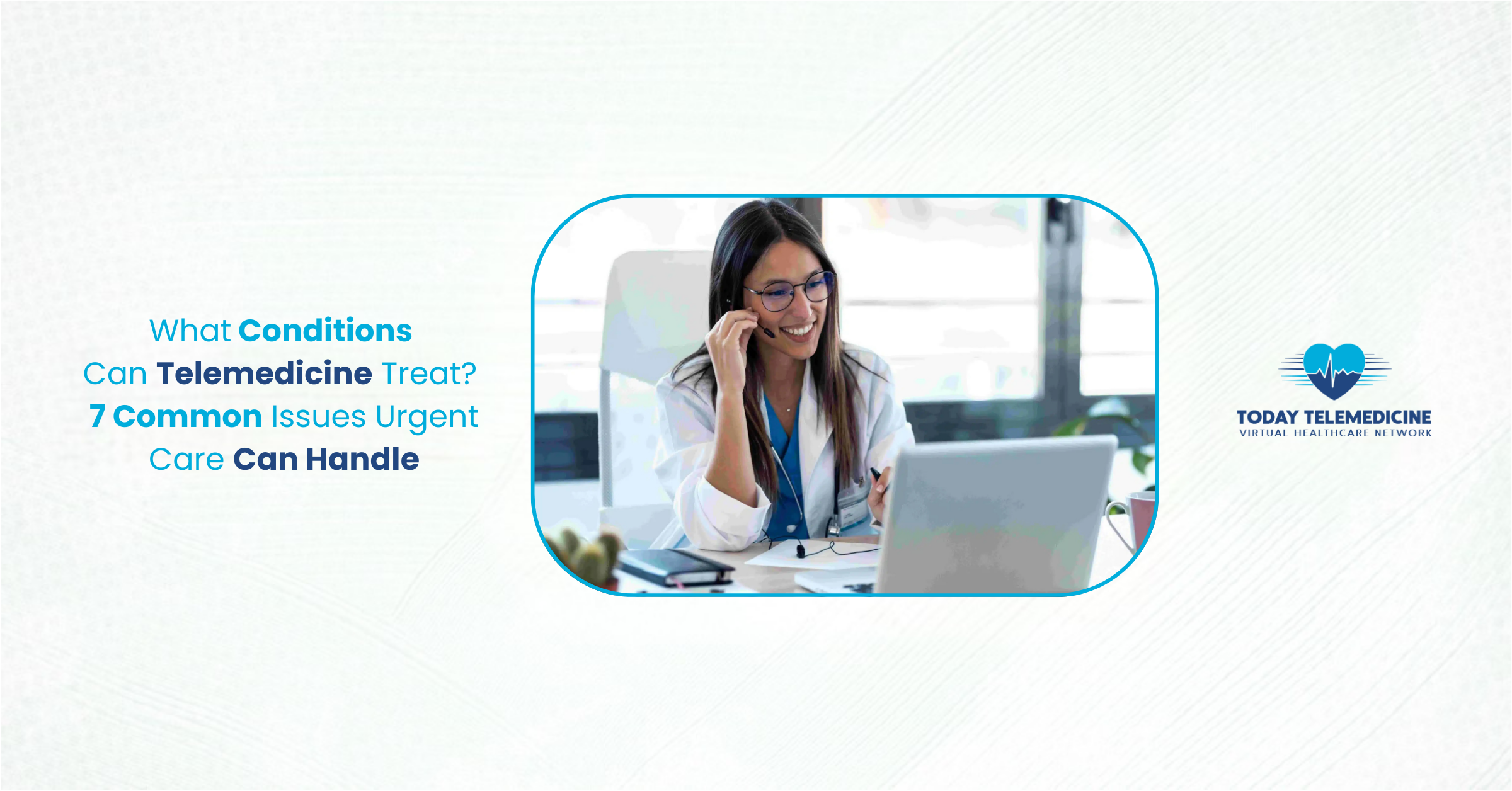
Life moves quickly, and when a cough, rash, or stomach bug hits out of nowhere, the last thing most families want to do is sit in a waiting room for hours. That’s when urgent care via telemedicine comes in. With a virtual visit, you can get good medical advice from the comfort of your own home in just a few minutes. You won’t have to drive far, wait in crowded waiting rooms, or be around more germs.
Telemedicine makes it easy for busy parents, remote workers, and caregivers to get in touch with qualified providers for quick and reliable care. Their virtual urgent care service lets people get medical advice, treatment suggestions, and prescriptions whenever they need them.
This guide will show you seven common health problems that can often be safely treated over the phone. This will help you figure out when a virtual urgent care visit is the best choice.
Common Conditions Telemedicine Can Treat
Many everyday health concerns can be handled through telemedicine urgent care visits. During a video consultation, providers look at symptoms by talking about them, looking at the patient’s medical history, and examining the patient.
Telemedicine is used to treat a lot of different illnesses, such as:
- Symptoms of colds, flu, and sinus infections
- Rashes on the skin and allergic responses
- Problems with the stomach and intestines
- UTIs, or urinary tract infections
- Seasonal allergies
- Infections of the eyes, like pink eye
- Small injury to muscles or joints
Video consultations are a frequent way for virtual urgent care platforms like Today Telemedicine to help with non-emergency issues like respiratory symptoms, skin disorders, UTIs, and stomach pain.
Telehealth urgent care is typically a good initial step if the condition is mild to moderate and can be evaluated through conversation or a visual check.
What Is Telemedicine Urgent Care?
Telemedicine urgent care is a virtual appointment with a registered healthcare provider for health concerns that aren’t emergencies but need to be taken care of right away. Patients don’t have to go to a clinic to see a provider; they can do it through a smartphone, tablet, or computer.
During an online urgent care visit, providers can:
- Check out the symptoms
- Look over the medical history
- Suggest a course of action
- Give out prescriptions as needed
- Give follow-up counsel
People get quick medical advice, diagnosis help, and prescription help without having to go to a physical clinic.
Telemedicine covers the space between regular doctor visits and emergency care. It helps individuals get the attention they need for common health problems on time and keeps them from having to go to urgent care clinics for no reason.
Benefits of Telemedicine Urgent Care
Telemedicine urgent care is great for people who need medical help right away for a number of reasons.
Convenience
Patients can talk to a doctor from home without having to drive, wait in line, or change their plans.
Faster Access to Care
Virtual urgent care services generally connect patients with clinicians promptly, which lets treatment start sooner.
Lower Healthcare Costs
Insurance may cover online visits, which are generally cheaper than going to the emergency department.
Reduced Exposure to Illness
Virtual consultations save you time by letting you skip waiting rooms where contagious diseases could spread.
Access From Anywhere
Patients can go to appointments from home, work, or even while on the road as long as they have a gadget and an internet connection.
A lot of people now rely on telemedicine for their daily health care.
When Should You Choose Telemedicine Urgent Care?
Telemedicine is great for health issues that aren’t life-threatening but still need quick medical attention.
If you just started having these symptoms, a virtual urgent care visit might be a good idea.
- The condition isn’t too bad, with symptoms recently appearing
- You can talk about the problem or show it in a video
- You need to see a doctor right away
Immediate in-person medical care is necessary if your symptoms get worse or threaten your life.
7 Common Conditions Treatable Through Telemedicine Urgent Care
Here are seven common health problems that people often get treated through telehealth urgent care consultations.
1. Respiratory Infections Like Colds and Sinus Issues
Colds, sore throats, coughs, and sinus congestion are some of the most common reasons people use telemedicine.
Providers look at symptoms and may suggest rest, drinking more fluids, over-the-counter medications, or prescriptions if needed
Through telemedicine consultations, virtual urgent care services often help with breathing problems like cough, congestion, and slight pain when breathing.
If you have trouble breathing, a high fever that won’t go away, or symptoms that last more than 10 days, you should see a doctor in person.
2. Skin Rashes and Minor Allergic Reactions
Providers may see the affected area directly during a video visit, which makes it easy to check for skin concerns.
Some typical worries are:
- Bites from bugs
- Contact Dermatitis
- Minor allergic reactions
- Flare-ups of eczema
- Rashes that don’t seem to have a clear cause
Providers may need to administer antihistamines, soothing creams, or prescription medicines.
3. Gastrointestinal Issues Like Nausea or Food Poisoning
Telemedicine visits can often help with stomach issues like nausea, vomiting, diarrhea, and pain in the stomach.
Providers look at your symptoms, what you’ve eaten recently, and any possible exposure to illness. Most of the time, the major goals of treatment are to get adequate sleep, hydration, and change your diet.
Urgent care platforms for telemedicine regularly tell people how to deal with mild stomach problems and pain.
4. Urinary Tract Infections (UTIs)
Telemedicine urgent care treats UTIs and other common diseases.
Some of the symptoms are:
- Painful urination
- Going to the bathroom a lot
- Pain in the pelvis
- Pain in the lower abdomen
A lot of telemedicine providers can check symptoms and give antibiotics when they are needed.
Most virtual urgent care platforms can help you figure out what to do about a UTI without you having to go to a clinic.
Learn more: Can You Treat a UTI with Telemedicine? What to Expect from a Virtual Visit
5. Minor Musculoskeletal Strains and Injuries
During telemedicine visits, it is often possible to check formuscle strains, moderate back pain, and joint pain.
Providers may ask patients to show how they can move using video to check their range of motion and see if the injury looks small.
Rest, cold application, compression, and elevation are some of the things that doctors could suggest as treatment.
6. Seasonal Allergies
Another prominent reason people use telemedicine is for seasonal allergies.
Some common signs are:
- Sneezing
- Eyes pain
- Stuffy nose
- Pressure in the sinuses
- Runny nose
Doctors may suggest antihistamines, nasal sprays, or other medications to aid with allergy symptoms.
Changes to your lifestyle, such as staying away from pollen and utilizing air filters, may also help ease symptoms.
7. Eye Infections Such as Pink Eye
Telemedicine can often help doctors figure out what kind of eye problem you have, like conjunctivitis (pink eye).
Some signs could be:
- Red eyes
- Itching or burning
- Watery discharge
- Skin around the eyes that is crusty
If they think they are needed, providers may suggest warm compresses, wiping the eyes, or antibiotic eye drops.
If you have a lot of eye pain or your vision changes suddenly, you require immediate in-person evaluation.
When Telemedicine Urgent Care Is Not Enough
Telemedicine can help with a lot of things, but some problems need to be fixed right away.
If you have any of the following, seek immediate medical attention:
- Chest pain
- Trouble breathing
- Bleeding that won’t stop
- Fainting
- Broken bone and fracture
- Signs of a stroke
If there are signs of a serious illness or injury, telemedicine experts may also tell you to go to the emergency room.
How to Get Started with Telemedicine Urgent Care
It’s easy to get started with virtual urgent care.
With Today Telemedicine, patients can ask for a virtual visit and talk to a certified provider who can check their symptoms, provide them with medical advice, and send them prescriptions when needed.
To start:
- Request a virtual meeting
- Use your device to join the video visit.
- Get treatment recommendations and, if necessary, medications
Are you a new patient? Check out this guide.
Conclusion
With telemedicine urgent care, families can now get medical care in a whole new way. Virtual medical appointments can now be used to look at and treat a lot of common health issues, like lung infections, skin rashes, stomach problems, and UTIs.
Telemedicine makes it easier to get timely care without changing your daily routine by giving you immediate access to licensed healthcare professionals.
Today Telemedicine’s virtual urgent care services are a good place to start if you have a small health problem and want quick, easy medical advice.
FAQs
What conditions can telemedicine treat?
Telemedicine can help with a lot of mild to moderate illnesses, such as colds, rashes, gastrointestinal problems, allergies, UTIs, eye infections, and small injuries.
Can telemedicine providers prescribe medication?
Yes. When it’s medically necessary, providers can transmit prescriptions to a pharmacy electronically.