
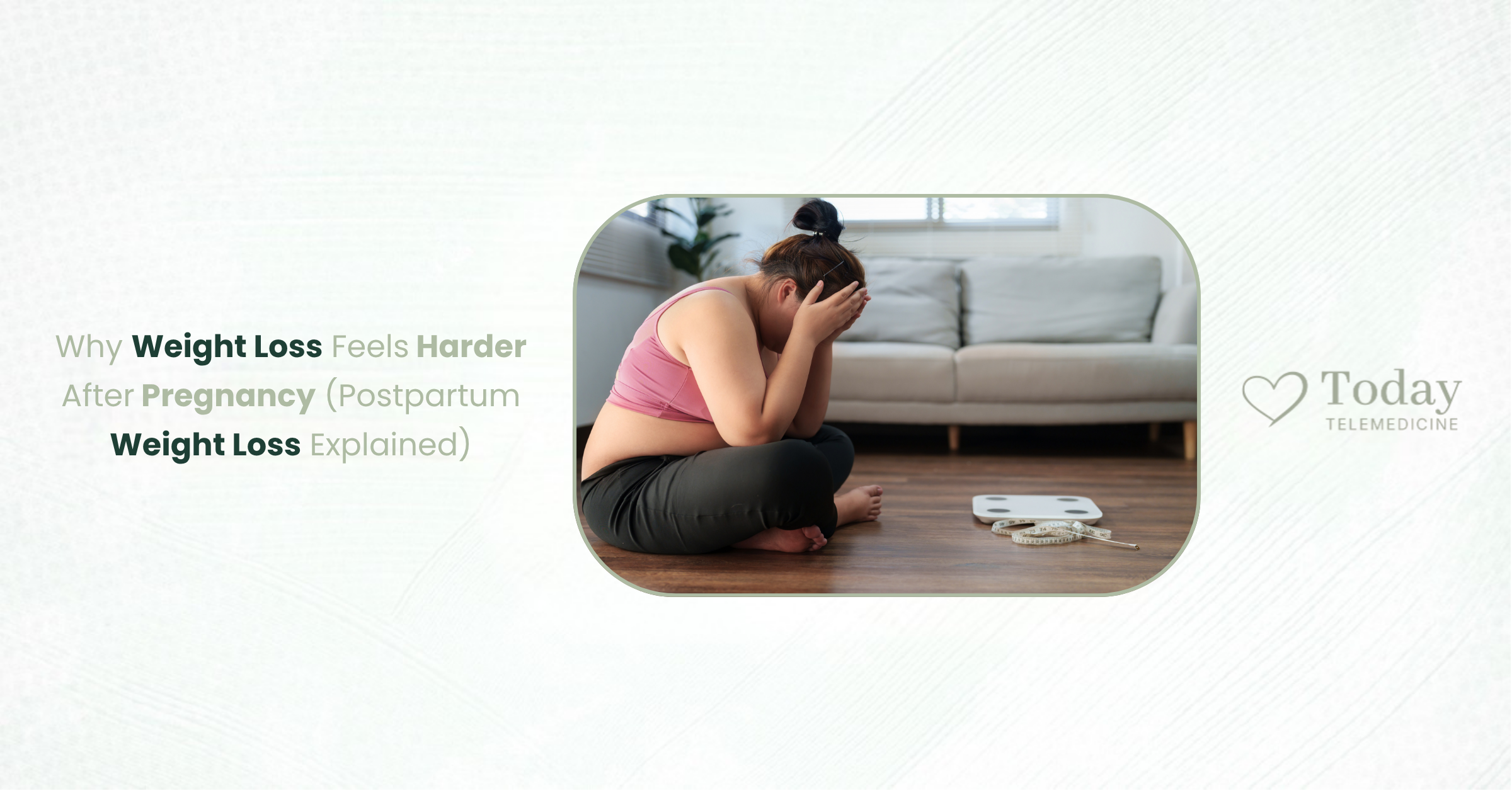
There is nothing like the feeling of a new baby being born that isn’t filled with joy and exhaustion. You deeply desire and love your child, yet there might be a little frustration that sometimes crosses your mind when you look in the mirror and ask yourself, “Why is postpartum weight loss so difficult when I’m trying my best?” This is accompanied by a whirl of difficult feelings, such as feeling deep love for your baby, the stress of resuming a normal routine, and occasionally, guilt over the lack or lack of progress.
Post-partum struggles with weight loss aren’t just about the “calories” or “exercise”. Often, more than people think, hormonal changes, sleep deprivation, emotional stress, or the excessive mental workload of new motherhood are more important. Many of our new moms have found support at Today Telemedicine during the postpartum period, which can be stressful enough, surrounding mental health, body image, and sustainable weight.
Why Is Postpartum Weight Loss So Hard?
It can be challenging to lose weight after childbirth because there are a few factors that can make it harder after childbirth, such as changes in hormones, interrupted sleep, stress, and hormonal and emotional shifts. These impacts make weight loss after giving birth more difficult than it was before, as the metabolism, appetite, and energy are decreased.
Why Postpartum Weight Loss Feels Different
The first few months after giving birth are an exceptional time for your body and your mind. Common weight loss strategies that work before pregnancy may not work after giving birth. Your body has not only grown and nurtured a new life; it has become a new one. Growing and sustaining a “new” life changed your body, and it will take time to heal.
There’s also a great societal pressure for many mothers to “bounce back” after giving birth, whether their journey has just ended or is about to commence, which may contribute to emotional stress as well as physical shifts. Facing the challenge with a biological and psychological perspective is great reassurance and makes it a challenge and not a failure on the person’s part.
The Mental and Emotional Factors That Make Weight Loss Harder
Feelings are a significant aspect of weight loss after giving birth. Though these factors are overlooked many times, it is a fact that they definitely have an impact on consistency, motivation, and success in the long-term.
Common experiences include:
- Excessive consumption of food when stressed, lonely, or tired
- Low motivation due to postpartum anxiety or low mood
- Struggling with body image and pressure to get the body back
- Sleep deprivation affects hunger hormones or cravings
- The psychological burden of motherhood has left little time to take care of themselves
These are normal reactions to a challenging time in life. The emotional and physical demands are to be met for lasting effects.
How Hormones, Sleep, and Stress Affect Postpartum Weight Loss
Post-pregnancy changes in hormones can lead to a decrease in metabolism and regulate appetite. Meanwhile, a lack of sleep can alter the levels of the hunger peptides ghrelin and leptin, which contribute to a greater sense of appetite and a decrease in energy.
Incorporate each additional stress, such as nurturing a newborn, and one can understand why it’s harder to lose weight after giving birth. Don’t be rash about it; it’s just your body adjusting to the change in major life.
Healthy and Realistic Ways to Lose Weight After Pregnancy
Fitting back into your pre-pregnancy shape and size after birth can be challenging. A healthy weight loss for postpartum ladies is not about a hard-and-fast regimen of dieting and exercise. It’s all about making small, achievable positive lifestyle changes to help you look after your body and mind.
Here are some action, caring strategies:
- Avoid restricting foods and beverages by concentrating on nourishment
- Pick an easy exercise, such as walking/stretching to the maximum degree
- Practice self-compassion NOT self-criticism
- Create simple routines that go with your daily life
- Look after your emotional eating if necessary with support
This progress will help in the long term without the strain of trying to make too big a stride.
When Postpartum Weight Loss Struggles Need Support
Losing weight is not always a merely physical struggle; it can be very emotional as well. If you need help, don’t feel ashamed; it’s a mature and caring approach!
Reconsider taking on the role or discuss your options with someone if:
- It’s difficult to control emotional eating
- The feelings about yourself are impacting how confident or how you’re feeling at the moment
- You have tried to change for the better, but are not making any progress
- You are feeling “stuck” when you try to change
- Daily functioning is affected by stress, anxiety, and/or low mood
How Today’s Telemedicine Supports Postpartum Weight Loss and Mental Health
We know that new moms deserve flexible and realistic help and assistance, and we’re here for you at Today Telemedicine. We have virtual therapy and virtual psychiatrist sessions available to help you with anything emotional that you are dealing with, such as motivation, stress, or anxiety, in the context of your postpartum weight loss.
Our care includes:
- Online therapy for emotional eating and body image issues
- Online counseling for the symptoms of depression and low energy levels
- Online counseling for depression and fatigue
- We understand that flexibility is important for you and your baby, and we can work out a time to suit you both
- A chance to get private video sessions with the teacher from home
It’s a holistic solution that can help you feel better both mentally and physically.
A Healthier Way Forward
Weight loss after giving birth isn’t so simple and is influenced by hormones, lack of sleep, stress, and emotional shifts. It is perfectly acceptable if a person has a bit of struggle in losing weight after pregnancy. It is normal weight loss after birth, and no one has anything wrong.
Finally, in the process of progress, it is important to be patient, be compassionate with yourself, and get it done with help.
Today Telemedicine’s virtual mental health services are here to assist you every step of the way as you come through the postpartum experience.
If you are on a weight loss journey, dealing with a body image thing, counseling, or emotional needs in your postpartum life, there is help out there, and it’s available to you. You’re already doing something so huge, you are doing something important. Taking care of oneself is one way to do that.
FAQs
Why is it harder to lose weight after pregnancy?
Hormones, sleep deprivation, stress, and emotions can all slow your metabolism after birth, and this can give you a greater sense of food cravings that may hinder your weight loss efforts.
How long does postpartum weight loss take?
This is a variable period of time, but a healthy and sustainable weight loss following pregnancy can take the course of several months or even a year, depending on the lifestyle, recovery, and support.
Is emotional eating common after pregnancy?
Yes. Emotional eating occurs very often following childbirth, as a result of stress, tiredness, and hormonal imbalances.
Can online therapy help postpartum mental health?
Yes. After having a baby, you can access convenient and private 1-on-1 care for anxiety, stress, and postpartum emotional issues, including from a virtual therapist.

)