
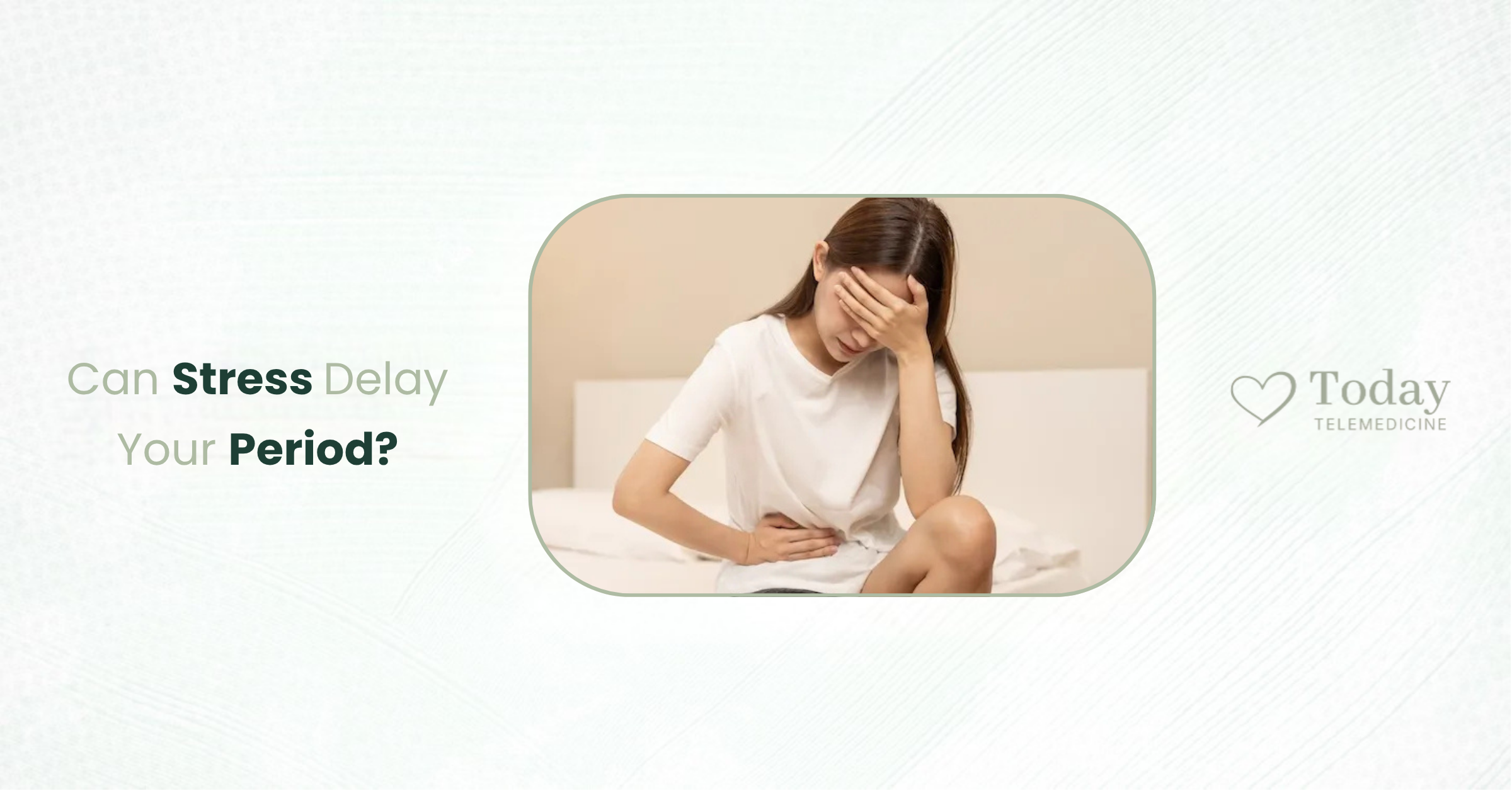
The quiet anxiety that sets in when your period is late, you begin to think of all the possible reasons, and maybe it’s the stress in your life doing its work. For many women, this feeling is confusing and concerning, particularly if their lives are already busy and full of responsibilities and daily obligations.
Stress not only affects your mood and energy levels but can also disrupt your menstrual cycle. Our virtual psychiatry and therapy services at Today Telemedicine encompass a variety of internal consultations with women to assist them in becoming familiar with the relationship between stress and their cycle, and offering support for both the emotional and physical sides of these experiences.
In this post, we’ll get to know more about how stress can impact the period, its causes, how to determine if it is a result of stress, and provide tips on how to support your body and mind in going through it, as well as when it is safe to seek out virtual health care professionals.
Understanding Your Menstrual Cycle
Your menstrual cycle is your body’s natural rhythm. It generally follows a relatively similar course, though the exact length can vary from person to person and even month to month. Each month, a typical cycle lasts around the clock and spans three to five weeks, driven by hormonal changes that prepare the body for a potential pregnancy.
Every woman is different, and so are her cycles. Some are very regular, while some fluctuate naturally. It is a normal variation and thus only one late period does NOT necessarily mean that something is wrong. Knowing your typical baseline can give you an idea of what is typically normal and when something is out of the ordinary, and perhaps when anxiety could be contributing.
How Stress Affects Your Hormones and Cycle
In response, high or prolonged stress triggers a state of survival. This response is aimed at more short-term processes than at longer-term ones, e.g., dealing with threats and reproductive processes. This can therefore temporarily disrupt your hormonal cycling.
Here’s how it often works in simple terms:
- Stress hormones hinder reproductive hormones, which regulate ovulation and menstruation
- As the body works to deal with stress, the brain’s communication with the ovaries can even slow or stop
- Sometimes this disturbance causes delayed cycles, smaller flow, or occasionally a period is missed during one cycle
What’s good is that these adaptations can actually serve as the body’s safeguarding function during unforeseen periods of life. Once stress levels return to normal and the body feels secure again, many women’s cycles will resume.
Can Stress Really Delay Your Period?
Absolutely, stress can sometimes delay a period for days or even weeks. It is particularly prevalent when there is stress or chronic stress, for example, when major life shifts are taking place, when there is a high workload, or when mothers are under a mental burden that they carry along in their everyday lives.
Sometimes, stress-related delays are frequent and typically not alarming. If, however, irregularities become persistent or other disturbing signs occur, it’s time to take note of them. This awareness can bring some peace and clarity to many women’s experiences when their cycle doesn’t act as well as it could.
Other Factors That Can Affect Your Cycle
Although stress is a common trigger for cycle changes, it is beneficial to think holistically.
- You may not get your period if there are any big shifts in weight, diet, or physical activity routine.
- If you are traveling, are sick, or are facing a significant change in your regular schedule
- You may be at risk for various hormonal disorders, including PCOS or thyroid problems, some medications, or contraceptives
A wider picture provides better information and awareness, helping women avoid hasty decisions about professional help.
The Mental Health Connection: Stress, Anxiety, and Your Cycle
There is a relationship between stress and menstrual health. High stress can disrupt your cycle. These changes in your cycle can lead to more feelings of low mood and anxiety. This is a recurring cycle most women feel, but hardly anyone is talking about it.
This is particularly true for the mind/body link in the busy mother and woman with several roles. Women achieve the best results when emotional wellness and hormonal health are addressed together, as many feel better supported and experience better outcomes when they are.
Practical Ways to Support Your Cycle and Reduce Stress
You don’t have to follow every routine or make a drastic change to support your cycle. Taking small, realistic steps that also prioritize mental health can make a noticeable difference in the long run.
It is possible to do it softly and effectively in these ways:
- Easy movement that is not stressful or compulsory
- Simple stress-reduction practices that fit into busy schedules
- Supporting consistent sleep and nourishment as much as possible
- Replacing self-criticism with self-compassion around natural cycle changes
- Keeping a record of your symptoms for several months to identify what your body reacts to most effectively
These strategies are more likely to be effective if they are perceived as nice or manageable rather than another task/errand.
When to Seek Professional Support
Asking for professional help is a healthy and nurturing option when it becomes troubling or has a major impact on one’s day-to-day life.
Consider reaching out if:
- Your periods are frequently missed or late, or highly irregular
- You are feeling stress or cyclic changes that are evident in your mood and quality of life
- Additional symptoms that are worrisome or would cause pain you could not handle
No matter whether the cause is stress or something else, whatever the picture suggests, a virtual psychiatry or therapy exam can assist you to sort it out and establish a supportive plan that suits your life.
How Today’s Telemedicine Can Help
At Today Telemedicine, we are available for women to talk more easily about their cycle changes, stress levels, and emotional health in a convenient, private place. For thoughtful but stress-free conversations, our virtual sessions in psychiatry and therapy should be suitable for reorganization.
The process is designed with real life in mind:
- Flexible scheduling around work and family responsibilities
- Compassionate support particularly tuned to women’s health concerns
- Collaborative care of mental health and physical symptoms, as needed
Support is available without coming in face-to-face, which makes it easier to take that crucial step towards understanding and relief.
Conclusion
Stress can indeed delay or disrupt your period by affecting hormones and the body’s natural rhythms. Understanding this connection helps remove unnecessary worry and opens the door to more compassionate self-care and effective support.
Today Telemedicine’s virtual mental health services are here to help women navigate these experiences with understanding and practical guidance. If you’ve been concerned about stress and your cycle, we invite you to book a virtual evaluation, explore our therapy or psychiatry options, or read related articles on women’s mental health, anxiety, and stress management.
Your body is responding to life’s demands in the best way it knows how. Support is available to help restore balance, and you deserve that care.
FAQs
Can stress really delay your period?
Yes. Stress is a common reason for delayed or missed periods, especially when it becomes intense or long-lasting.
How long can stress delay a period?
Stress can delay a period by several days or, in some cases, weeks. The length varies depending on the intensity and duration of the stress.
Can online therapy help with stress-related cycle changes?
Yes. Virtual therapy can address the emotional side of stress and help you develop practical tools to manage its impact on your body and mind.

